Engineering records / Engineering record / CORE-LOCK-CLEARANCE-R10
Core Lock Clearance R10.
Geometry, analysis and remaining engineering work for Core Lock Clearance R10.
Retained development study. Dimensions, names and checks belong to this revision—not automatically to the retrofit-only product. Manufactured tank shells are deferred. No installation instruction, certification or manufacturing release is represented.
The source reasoning
Why this detail was investigated.
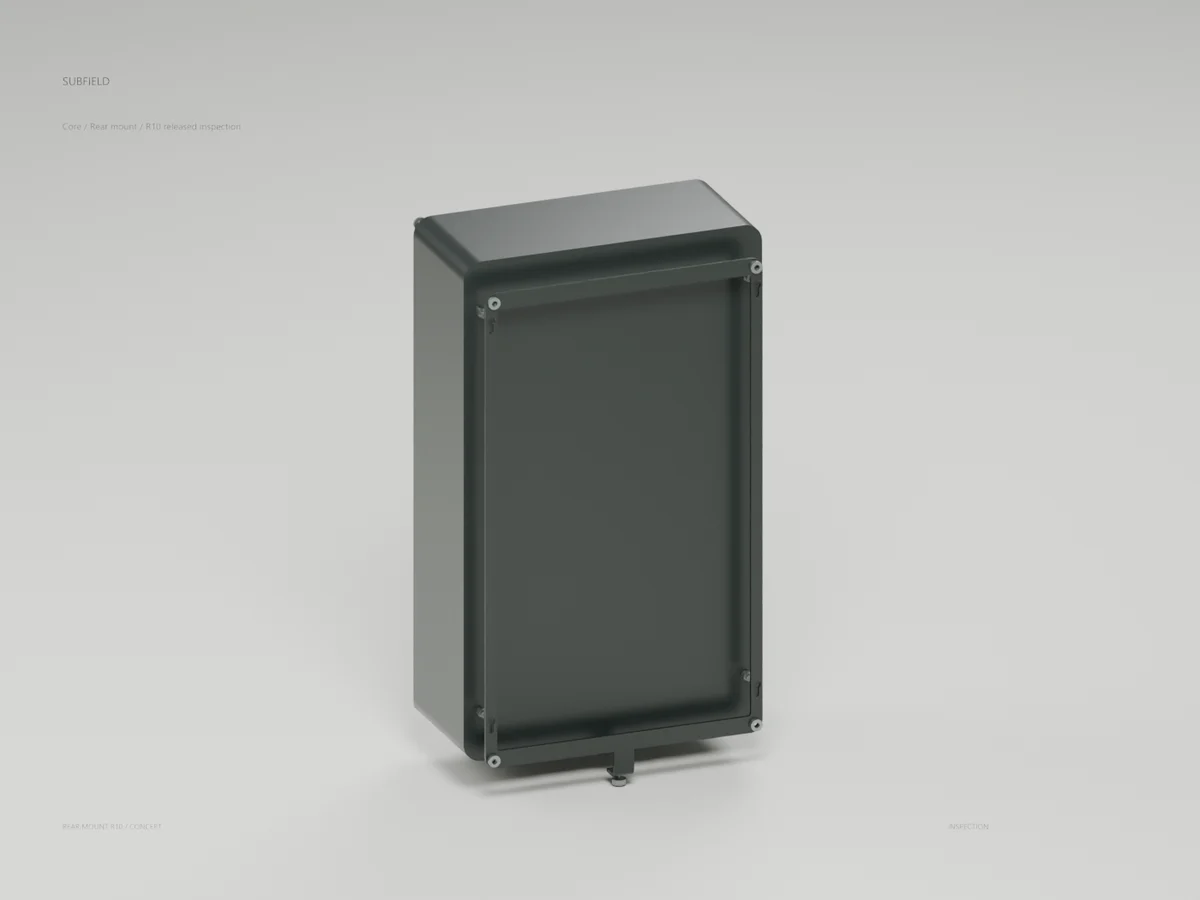
The carrier lock hole increases from 4.5 to 5.0 mm to accommodate the studied forming and position errors. The 4 mm formed return, captive screw, 6 mm nominal engagement and 7 mm withdrawal remain otherwise unchanged.
Read the research and limitsResearch record
The detail behind
the study.
Source-linked work for this revision. Reported checks describe the stated model or test; physical qualification and applicability to the current retrofit remain separate.
The carrier lock hole increases from 4.5 to 5.0 mm to accommodate the studied forming and position errors. The 4 mm formed return, captive screw, 6 mm nominal engagement and 7 mm withdrawal remain otherwise unchanged.
The worst calculated radial clearance is 0.262833 mm against the unchanged 0.10 mm study target. The nominal retainer-to-carrier contact footprint is 16.2681 square mm. This is a geometry measurement, not a load, contact-pressure or retention-life rating. The retainer still blocks excess axial withdrawal in the nominal model.
Two focused tests passed in 83.67 seconds. Nominal fit/export, removal/capture, formed-return and compartment checks pass. Full R10 CAD regression passed: 338 tests in 1859.22 seconds. A source copy in a separate locked dependency environment reproduced all 81 STEP bodies with zero Boolean symmetric difference.
The forming assumptions remain unqualified; no supplier or manufacturing process has been selected. Material, tooling, springback, head seating under angular error, retainer elasticity, threaded strength, physical assembly and environmental qualification remain open. Electrical components, wiring and complete-system manufacturing definition are unfinished. This is a concept review package, not a production release. The R10 individual files and flat-pattern study now include this hole change.
carrier-inspection/ contains fifteen STEP-derived nominal feature measurements, an inspection setup proposal and a conservative four-stud alignment budget. Production tolerances and material/process selections remain unassigned. The separate washer interface study is not integrated into this R10 assembly.
The R10 hole clears the screw in the studied angle/position cases, but the nominal locked head interferes with the tilted foot in some cases. A rigid head withdrawal of up to 0.277996 mm clears the interference. This geometric adjustment does not produce parallel bearing faces or establish acceptable contact pressure.
The checks use actual STEP head and foot geometry at -1, 0 and +1 degree with three transverse shifts. They omit elastic deformation, coatings, tightening and load. No field adjustment procedure is implied.
A sourced angular-seat candidate is NBK SQWS-4, a concave/convex stainless washer set. The manufacturer drawing lists nominal M4, outside diameter 9.4 mm, bores 4.5/4.9 mm, assembled thickness 3 mm, radius 10.2 mm and maximum tilt 2 degrees. The material is SUS304. These are catalog dimensions, not a compatibility or load approval for Subfield.
Next integrate both washer elements and retain them during service. Rework screw neck length and head position for the extra stack; verify washer seating, freedom to swivel, bore clearance, retainer travel and closed/released positions. The existing M4 envelope and current carrier hole alone do not prove the set will work. No washer is yet modeled or selected for production, and no purchase was made.
Source and revision record
Source: core-lock-clearance-r10/READ-ME.md
Source SHA-256: f10aa7e3c9e26f16dfd382de68922e717b6b74ee0e51206aa94bd39504ff6d0e
Geometry and images describe this development revision. Current product ratings and manufacturing release require separate qualification.
Keep exploring the research.
Engineering records / Engineering record
Core Carrier Formed R9
Geometry, analysis and remaining engineering work for Core Carrier Formed R9.
Engineering records / Engineering record
Core Rear Mount R8
Geometry, analysis and remaining engineering work for Core Rear Mount R8.
Engineering records / Engineering record
Core Rear Mount R7
Geometry, analysis and remaining engineering work for Core Rear Mount R7.
Return to the current product.
Explore the retrofit-only platform and its compatibility, installation and service objectives.
Explore the retrofit